

Worldbuilding Omegaverse: An In-Depth Exploration
Worldbuilding omegaverse is a rich, nuanced concept that has gained increasing traction in speculative fiction, fan-works, and original storytelling spaces. For creators, it offers a flexible, alternative social and biological framework in which societies, hierarchies, relationships and identity can be reimagined. In this detailed article we will explore the history of worldbuilding omegaverse, its objectives, how to implement it, examine state-wise or regional variations (in a metaphorical sense, rather than literal geopolitical states), success stories, challenges, comparisons with other speculative frameworks, and its future prospects. By the end, you’ll have a comprehensive understanding of worldbuilding omegaverse and actionable insight into how to build your own version.
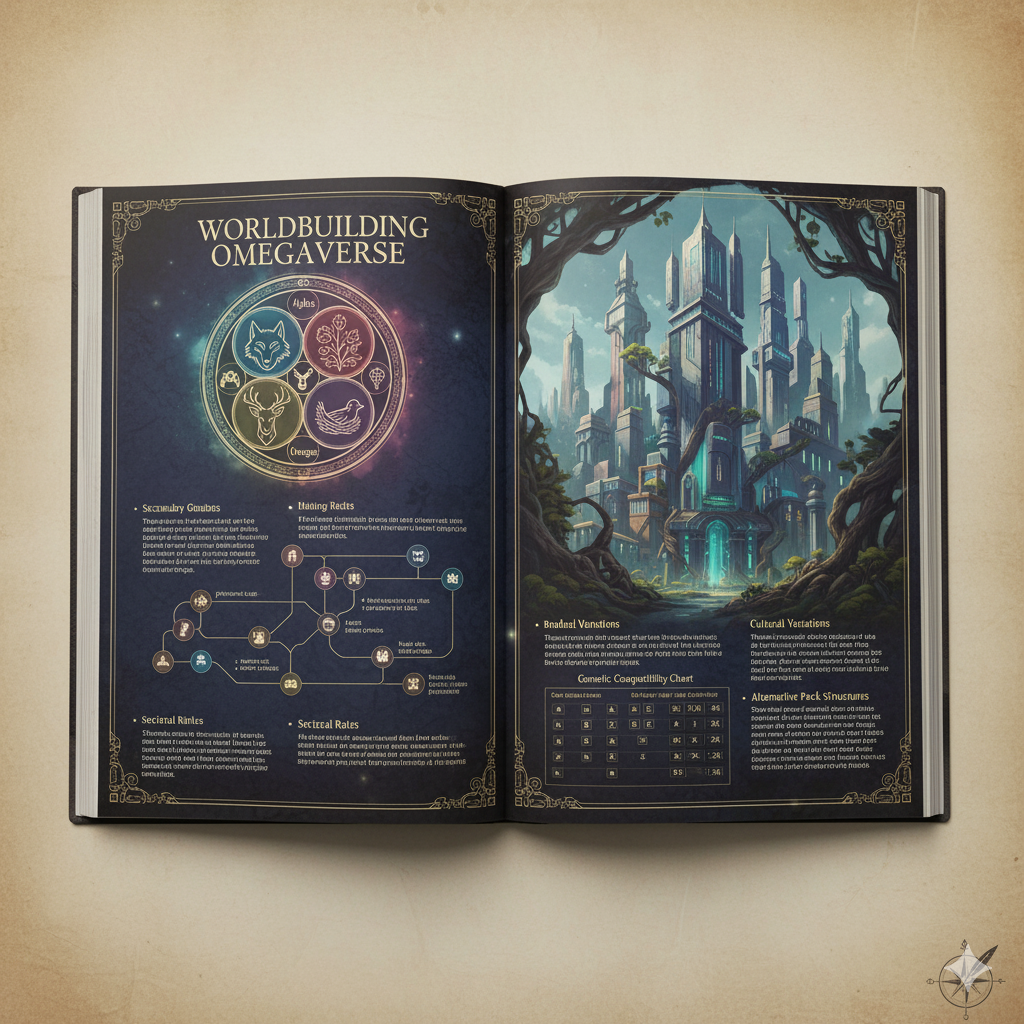
What is Worldbuilding Omegaverse?
At its core, the term worldbuilding omegaverse refers to the practice of constructing a narrative universe that incorporates the elements of the omegaverse (sometimes shortened to ABO: Alpha/Beta/Omega) trope in a consistent and structured way. The omegaverse concept originates in fan-fiction and speculative erotica, where characters are assigned secondary “genders” (or roles) of Alpha (α), Beta (β) or Omega (Ω) beyond the typical male/female or gender identities. Wikipedia+2dreamscapepublishing.com+2
In worldbuilding omegaverse, instead of simply employing those roles as shallow tropes, the creator envisions how such a system might influence biology, society, culture, politics, family structures, power dynamics, identity, and more. What happens when Alphas, Betas and Omegas are embedded into the very fabric of society? How do they affect social welfare initiatives, rural development of fictional lands, empowerment schemes for marginalized Omegas or Betas, policy frameworks, regional identity and state-like entities in the story world? Thinking in those terms brings a level of depth and authenticity to worldbuilding omegaverse that goes far beyond simple character tropes.
Put another way: worldbuilding omegaverse is the blueprint for how a society built around or incorporating Alpha/Beta/Omega dynamics functions — its history, institutions, social welfare, regional differences, conflicts, evolution, and future. It is this full societal scope that we will explore.
Historical Origins and Evolution
Early Origins
Although the word “omegaverse” is relatively recent, the underlying concept has roots in earlier speculative and slash-fiction traditions. The formal emergence of the omegaverse trope occurred in the 2010s via erotic fan-fiction in which authors introduced characters with secondary sexes of Alpha, Beta, and Omega. Wikipedia+1 The hierarchical system—dominant Alphas, neutral Betas, submissive or nurturing Omegas—echoes mythic and werewolf-inspired tropes. dreamscapepublishing.com
Growth and Diversification
Over time, creators began to ask deeper questions: Why do Alphas need to be dominant? What if Omegas weren’t necessarily submissive? What if Betas had distinct cultural roles rather than simply “normal humans”? This evolution expanded the concept into worldbuilding, where authors built societies shaped by these roles, creating entire alternate societies, legal systems, cultural norms, fertility rites, territorial systems, mating rituals and more. For instance, one Tumblr resource describes how in worldbuilding omegaverse the question “How are Omegas treated?” becomes central to how society functions. Tumblr+1
From Fan-Fic to Original Fiction
Originally confined to fan-fiction, the omegaverse concept has evolved into standalone original fiction and publishing. Creators now employ the trope as the basis for entire universes, often with robust internal logic and worldbuilding scaffolding. As one commentary states: “It provides a good deal of flexibility … At the same time, we don’t always think through how this society came to be.” This push toward world-building rather than simply trope-use has given rise to what we refer to here as worldbuilding omegaverse: the intentional creation of a universe structured around Alpha/Beta/Omega dynamics.
Objectives of Worldbuilding Omegaverse
When a creator chooses to engage in worldbuilding omegaverse, there are several key objectives they may have in mind:
1. Re-imagining Social Structures
One major objective is to question or invert established social hierarchies and norms. By introducing secondary gender or role designations (Alpha/Beta/Omega), creators can explore alternative power dynamics, identity, reproduction, and class systems. They may ask: What if a certain role carried systemic privilege? What if another role carried systemic disadvantage? How does that mirror or subvert real-world issues such as gender, race, socio-economic class, or power?
2. Exploring Biological and Cultural Variation
Worldbuilding omegaverse allows for the re-imagination of biology: heat cycles, pheromonal attraction, secondary sex classes, mating systems, fertility, territory marking, nest building (as tropes suggest). dreamscapepublishing.com+1 But beyond biology, culture shapes how these roles are treated, how institutions respond, and what laws exist. The objective is to create a credible, immersive society influenced by those roles.
3. Creating Conflict and Societal Stakes
Any good world-building provides conflict. In an omegaverse society, conflict may come from oppression of Omegas, dominance of Alphas, or the marginalization of Betas. Another conflict might be internal: characters dealing with their roles and what it means. Societal stakes might include rights for Omegas, ‘pack’ dynamics, inter-role boundaries, or rebellion against prescribed hierarchy. As some fans note, the world-building aspects such as territory, pack membership, and hierarchy become central. Reddit+1
4. Enabling Diversity and Subversion of Norms
Worldbuilding omegaverse is often used to explore identity beyond the binary and to highlight queer, trans, or non-binary experiences. While the trope is not without criticisms, many creators aim to use it as a lens to examine consent, power, reproduction, gender norms, and identity. Wikipedia
5. Providing Reader/Creator Engagement
For many fans and creators the appeal lies in the depth and detail possible: territorial politics, scent marking, bonding rituals, developmental presentation, social welfare of Omegas, etc. The objective may simply be to craft a deeply immersive, original universe where these elements interact in complex ways.
Implementation: How to Build a Robust Omegaverse World
Implementing worldbuilding omegaverse involves multiple layers—from high-level societal design down to character–role dynamics. Below is a step-by-step approach to building your world.
Step 1: Define the Role Structure
Start by defining how the roles (Alpha, Beta, Omega) function biologically, socially and culturally. Ask: Are these secondary sexes in addition to male/female? Are they biological, cultural, or both? For example, some versions treat Alpha/Beta/Omega as secondary sexes manifesting during adolescence. cherrypickett.com+1
Define traits:
-
Alphas: Dominant, territorial, leaders, strong, perhaps heavy fertility or linking roles.
-
Betas: The “norm” or neutral, could be large population, maybe less reproductive pressure, more stability.
-
Omegas: Reproductive, nurturing, often subject to heat cycles, may be undervalued or marginalized depending on the world. dreamscapepublishing.com+1
Step 2: Create History and Cultural Foundations
World-building omegaverse requires a backstory and cultural logic. Ask: How did this society come to have these roles? Was there a genetic mutation, evolutionary divergence, supernatural event, or social reorganisation? One commentary suggests “some explain omegaverse as genetic evolution … or in other cases, it’s the result of some catastrophic event.” cherrypickett.com+1
Develop meaningful history: perhaps early society treated Omegas as property, then reforms emerged; regional differences emerged; wars of dominance between Alphas and Omegas; territories built; societal changes for rural/urban zones.
Step 3: Establish Institutions and Policy Frameworks
In a viable omegaverse world, institutions will reflect role-based hierarchies and needs. For example:
-
Territorial governance: Pack leaders, Alpha councils, Beta assemblies, Omega representation.
-
Social welfare initiatives: programmes for Omegas during heat cycles, maternity/child rearing programmes, support networks for Betas feeling excluded.
-
Regional development: rural pack lands vs urban Alpha-dominated zones; infrastructure development addressing the needs of Omegas (nest spaces, health care) and Betas (who may hold large portion of workforce).
-
Legal and policy frameworks: rights for Omegas and Betas, contracts or bonding rituals, consent laws (especially important given sexual and reproductive dynamics in many omegaverse narratives).
By thinking in terms of policy frameworks and welfare initiatives you elevate worldbuilding omegaverse from trope usage to credible societal design.
Step 4: Map Regional/State-Wise Variations
Just as in real countries, fictional states or regions in an omegaverse world will differ. Consider:
-
A rural Omega-heavy region with communal nesting grounds, strong matriarchal (or Omegarchal) councils, strong emphasis on reproduction and nurturing.
-
An urban Alpha-dominated metropolis: high competition, corporate pack structures, Betas as workforce, Omegas under pressure or empowerment depending on culture.
-
A Beta-led republic: Betas form majority, Omegas are treated as equals, Alphas hold military leadership.
By building such regional differences, you create texture and realism in your world. This is central to worldbuilding omegaverse: the idea that the roles matter not just at the interpersonal level, but at the state/regional/cultural level.
Step 5: Explore Social Welfare, Empowerment and Development Themes
In many omegaverse narratives, Omegas are socialised into caring, nurturing roles; sometimes they are marginalised. But worldbuilding omegaverse allows you to address this deliberately:
-
Women (or female-identified Omegas) empowerment: Are female Omegas able to ascend leadership? Are there initiatives to support them?
-
Rural development: In rural pack territories, how are nests built, how is healthcare for heat cycles managed, how are children raised?
-
Social welfare initiatives: Programs for Omegas during bonding, maternity, heat suppression medicine, support for Betas and Alphas in transition.
By explicitly creating these systems you deepen your world and provide narrative opportunities.
Step 6: Embed Conflict, Success Stories and Challenges
Worldbuilding omegaverse is not just about structure — it’s about tension and change. What are the success stories? What are the ongoing challenges? Some examples:
-
Success: A region where Omegas earned full citizenship, their nests are protected, their bond rights recognised, resulting in higher social stability.
-
Challenge: Another region where Omegas are still treated as breeders, territory conflicts between Alphas, unsuspected heat leading to political crisis.
By embedding these, your narrative becomes dynamic.
Step 7: Examine Future Prospects and Evolution
Think ahead: How will your world evolve? Will there be reforms in the role hierarchy? Will Betas demand more representation? Will Alphas challenge their dominance? Will biological advancements or medicine alter heat/rut cycles? Will colonisation or external societies reshape the system? This forward-thinking is essential to robust worldbuilding omegaverse.
State-wise (Regional) Impact & Variations
To truly grasp worldbuilding omegaverse, it is helpful to envision how different “states” or regions within the universe treat the Alpha/Beta/Omega roles differently. Here are three illustrative models:
Region A: The Alpha Dominion
In this region, Alphas hold formal political and military power. Territorial packs are ruled by Alpha elders, Omegas fulfill reproductive and nurturing roles, Betas are workers and administrators. Social welfare initiatives exist primarily to support Alphas and nod to Omegas’ cycles (heats, nesting). Rural development focuses on pack holdings, Alpha-led agriculture or resource extraction, and Omega communities are supported through nesting centres.
Impact: A strong hierarchical social structure; Omegas empowered only insofar as they serve the system; rural areas unify under pack territories; social welfare is limited and biased toward maintaining Alpha dominance; female Omegas may have more rights in Omega enclaves but still limited within the broader hierarchy. This creates high tension and conflict—ideal for stories of rebellion, empowerment, or transformation within a worldbuilding omegaverse setting.
Region B: The Beta Republic
Here Betas are the dominant group. Alphas still exist but hold specialised roles (military, security), Omegas are treated as equal citizens, supported through robust social welfare, health care for reproductive cycles, empowerment programs for Omegas, rural development focusing on communal living, shared governance. The policy framework emphasises consent, choice of roles, suppression of forced hierarchies.
Impact: Far more egalitarian, though tensions remain (Alphas resent loss of dominance, some Omegas chafe at expectation to nurture). Rural development is more inclusive—Omegas can choose to lead rural cooperatives, Betas run local governance, and Alphas may serve as mentors. Women-identified Omegas may hold leadership positions. This variation of worldbuilding omegaverse showcases how the roles can be turned into a progressive architecture rather than oppressive.
Region C: The Omega Utopia (Emerging)
In this region, Omegas have achieved autonomy. The region is perhaps historically dominated by Alphas but went through a revolution. Policy frameworks support Omega rights, heat/rut cycles are regulated autonomously, Alpha dominance is restricted or democratised, Betas act as mediators, and rural development emphasises sustainable nests, community-led development, empowerment of formerly marginalised roles. Social welfare initiatives are broad: health care for all roles, education, communal nesting, parental choice, reclamation of territory.
Impact: High social welfare standards, active women empowerment (female Omegas in government, Alpha-Omega partnerships with equality), rural development emphasising local agency, social welfare programmes for young Omegas, transition support for those moving between roles (if the world allows flux). This region reflects an advanced stage of worldbuilding omegaverse: roles retained but the hierarchy flattened and individual agency enhanced.
By building such regional variation, your world gains texture and realism. Readers will sense that your worldbuilding omegaverse is not monolithic but diverse.
Success Stories in Worldbuilding Omegaverse
While actual real-world case studies don’t exist (since the omegaverse is fictional), we can consider success stories within the domain of creative work and community building that illustrate what strong worldbuilding omegaverse can achieve.
Creative Community Growth
The concept of the omegaverse originally in slash-fiction communities has grown massively: for example, by 2018 the site Archive of Our Own (AO3) hosted around 39,000 omegaverse fanfictions, and by 2020 approximately 70,000. Wikipedia+1 This explosion demonstrates how worldbuilding omegaverse captured creator interest—and how many authors created intricate universes with consistent rules.
Depth of Worldbuilding Resources
Several blogs and Tumblr posts offer “starter kits” for omegaverse world-building—addressing questions such as “How are omegas treated?” or “What are the traits/instincts of Alphas?” These resources give creators tools to build immersive worlds rather than loose tropes. Tumblr For instance, the “Omegaverse Worldbuilding Starter Kit” encourages thinking through daily life, social welfare, and class structure. This shows that worldbuilding omegaverse isn’t shallow—it has tool-kits.
Original Fiction Achievements
Some authors have leveraged omegaverse world-building into original commercial works, not merely fan-fiction. The transition showcases that creators who use worldbuilding omegaverse frameworks have achieved success by offering readers fully realised societies with conflict, identity, and sociological depth.
Reader Engagement & Subversion
Many worldbuilding omegaverse stories succeed because they use the role‐dynamics to engage readers with themes like consent, identity, marginalisation, power reversal and healing. These are success stories in that they convert a trope into meaningful narrative. For example, a blog post shows how the worldbuilding element—territory, pack membership, and societal expectation—makes the narrative richer. Reddit
Challenges and Critiques
Worldbuilding omegaverse, like any speculative framework, has its challenges and criticisms. It is important for creators to be aware of these so they can build responsibly, avoid pitfalls, and create more inclusive stories.
1. Risk of Reinforcing Harmful Tropes
One of the major critiques is that the omegaverse trope can reproduce patriarchal, heteronormative or non-consensual frameworks: submissive Omegas, dominant Alphas, forced bonds, lack of agency. These issues become more problematic if the world-building doesn’t actively engage with them. Critics note that “some darker works … reinforce essentialism and power imbalances.” Wikipedia In worldbuilding omegaverse you need to consciously address how your society treats consent, autonomy, role assignment, social mobility.
2. Biological Implausibility and Over-Complication
From a suspension-of-disbelief standpoint, building a society where secondary sexes (Alpha/Beta/Omega) are biologically, socially, and culturally fundamental can be a burden. Some creators may get lost in detailing pheromones, heats, knots, territory marking without anchoring them in character or narrative. One guide warns that many creators “don’t always think through how this society came to be.” cherrypickett.com A stronger focus on history, cause and effect helps mitigate this challenge.
3. Representation and Inclusivity
Because the trope is historically rooted in male/male romance and fan-fiction, issues of race, gender identity, sexuality, cultural representation and power dynamics often arise. Some argue that omegaverse stories default to white male narratives, replicating existing biases. Wikipedia In worldbuilding omegaverse it’s important to diversify roles, include marginalized identities, allow fluidity, and question assumed norms.
4. Audience Reception and Niche Nature
While popular in fan-fiction communities, the omegaverse framework remains a niche genre in mainstream literature. Some readers may find its biology or role hierarchy off-putting. Engagingly executing worldbuilding omegaverse means balancing the unique world elements with relatable characters and universal themes. This is a challenge for creators aiming for broader appeal.
5. Maintaining Internal Consistency
With many moving parts — biology, society, roles, territory, social welfare, regional variation — it can be easy to create inconsistencies or lapses in logic. A world that claims Omegas are autonomous yet fails to show institutional support for them will feel under-developed. For effective worldbuilding omegaverse, creators must maintain internal logic, show the ripple effects of role dynamics across all layers of society (economy, politics, social welfare, culture, development).
Comparisons with Other Speculative Frameworks
To place worldbuilding omegaverse in context, it is helpful to compare it with other speculative world-building frameworks.
Omegaverse vs Dystopian Societies
Traditional dystopian fiction builds societies with oppressive governments, surveillance, class stratification. In worldbuilding omegaverse, the stratification is built into biology and role designation (Alpha/Beta/Omega) which creates societal structure from the bottom up. Whereas dystopias are often political, the omegaverse has a built-in biological/role system that interacts with politics. This difference means worldbuilding omegaverse offers both sociological and biological lenses.
Omegaverse vs Alternate Genders in Sci-Fi/Fantasy
Other speculative frameworks introduce new genders, alien biology, or gender fluidity. Omegaverse does this too but adds hierarchical roles (Alpha dominance, Beta neutrality, Omega nurturing) and reproductive mechanics such as heats, pheromones, knots, territory marking. The effect is more codified: the role system dictates social class, biology and culture in one. Compared to alien-gender frameworks, worldbuilding omegaverse places more emphasis on instinct, scent, territory and hierarchy tied to reproduction.
Omegaverse vs Magical Fantasy Systems
Magical fantasy often builds societies around magic, mythical creature races, or supernatural systems. While worldbuilding omegaverse can include such fantasy elements (wolves, shapeshifters, etc.), its core is role and biological/hierarchical design rather than magic per se. The result is that worldbuilding omegaverse feels more socio-biologically speculative than purely magical. This gives it a different flavour of world-building.
Omegaverse vs Traditional Romance Tropes
In many romance stories, characters follow gender norms, monogamous pairing, heterosexual framing, and familiar power dynamics. By contrast, worldbuilding omegaverse introduces alternative sexualities (male Omegas, female Alphas, same-role pairings), fertility variations, stronger emphasis on reproductive roles and power structures. Thus, worldbuilding omegaverse allows subversion of standard romance tropes.
Future Prospects of Worldbuilding Omegaverse
As speculative fiction and fan communities evolve, the worldbuilding omegaverse framework shows promising future directions.
Mainstream Adoption and Diversification
Though rooted in fan-fiction, worldbuilding omegaverse is increasingly appearing in original novels, web serials, manga/manhwa, and even live action adaptations. For example, some reports indicate live-action series based on the omegaverse concept are emerging. Indiatimes As the framework enters broader markets, creators can bring more sophistication, diverse cultural settings, intersectional identity, and mainstream storytelling elements into worldbuilding omegaverse.
Intersectional and Inclusive Narratives
There is growing awareness of the need to include diverse voices in speculative world-building: non-binary characters, persons of colour, varied cultural backgrounds. Worldbuilding omegaverse has the potential to be a platform for such narratives—if creators intentionally build inclusive societies, equitable policy frameworks, social welfare systems that support all roles. The “state-wise” or regional variation concept can expand to include multiple cultures and geographies.
Evolution of Role Dynamics
Future worldbuilding omegaverse stories may move beyond static Alpha/Beta/Omega hierarchies. They may explore role fluidity, role change over time, hybrid roles (Alpha-Omega), technological or biological interventions (suppression of heat cycles, role conversion), and larger scale societal shifts (abolishing the hierarchy). Such evolution keeps the framework fresh and allows creators to tackle themes of change and reform.
Cross-Genre Hybrids and Worldbuilding Innovation
By merging worldbuilding omegaverse with dystopian, cyberpunk, space opera, post-apocalyptic or fantasy settings, creators can expand its possibilities. Imagine an interplanetary omegaverse society, or a cyberpunk city where Alpha corporations dominate and Omega enclaves exist on the margins. Such cross-genre worldbuilding can make the concept more versatile and accessible to new audiences.
Scholarly and Critical Engagement
As the framework matures, worldbuilding omegaverse may invite more critical analysis—on topics of gender, biology, power, consent, queerness. Already academics have used the omegaverse trope to analyse dominance hierarchies and intimate dynamics. Wikipedia A deeper academic and critical engagement will elevate the concept and broaden its appeal beyond niche fandom.
Final Thoughts
Worldbuilding omegaverse offers creators a robust, flexible, and richly layered framework to imagine societies that differ from our own yet reflect our real-world concerns: identity, power, biology, gender, social welfare, regional development, empowerment, and transformation. By carefully defining role structures, cultural history, institutional frameworks, regional variation, social welfare systems, and transformational arcs of success and challenge, one can craft a universe that stands out.
Whether you are planning a short story, novel, fan-fiction or a full world-building bible, treating the Alpha/Beta/Omega roles as structural elements of politics, economy, social welfare, rural development, empowerment and development will give your work depth and authority. Engaging with the critiques—on representation, consent, hierarchy—and evolving the trope thoughtfully will further strengthen your world.
In sum: worldbuilding omegaverse allows you to build not simply characters who are Alpha, Beta or Omega, but entire societies shaped by those roles—with regional variation, policy frameworks, empowerment programmes, institutional support, and future prospects of reform. The key is to treat it as a full societal system, not just a sex-trope. With that approach you can create immersive, original, compelling worlds that resonate.
FAQs
What differentiates worldbuilding omegaverse from basic omegaverse fan-fiction?
Basic omegaverse fan-fiction often uses the Alpha/Beta/Omega roles primarily for interpersonal dynamics (e.g., an Alpha with an Omega mate) without deep exploration of how the roles impact society at large. Worldbuilding omegaverse goes further: it asks how the roles shape institutions, regional development, policy frameworks, class systems, identity, and the cultural landscape. It embeds the roles into the fabric of the world rather than simply the characters.
How do I handle consent and power dynamics in worldbuilding omegaverse responsibly?
Responsibility starts with acknowledging power imbalance built into many iterations of omegaverse (dominant Alphas, submissive Omegas). To handle it responsibly, establish clear rules around consent, allow Omegas agency and autonomy, avoid portraying their role as inherently powerless, allow Betas meaningful place, include mechanisms for reform and role-mobility, and reflect on how societal systems support or challenge the hierarchy. By explicitly building institutions and policies that protect rights and agency, you create a more inclusive and ethical world.
Can the roles of Alpha, Beta and Omega change over time in a worldbuilding omegaverse?
Yes — and doing so offers rich narrative potential. You might build a society where role designation is fixed from puberty, or one where individuals can transition between roles via technology, medical intervention, or social reform. Regional variation might include states that allow role fluidity and others that rigidly enforce hierarchy. Allowing change opens up storylines of reform, personal growth, revolution and shifting identity.
How do I integrate regional development and social welfare into worldbuilding omegaverse?
Start by imagining different regions (“states”) in your world with distinct governance and cultural traditions. Develop social welfare policies for Omegas (healthcare for heat cycles, nesting support, parental programmes), for Betas (education, workforce development, recognition), and for Alphas (leadership training, territorial governance). Consider rural development (remote pack territories, communal nests, cooperative governance) versus urban development (Alpha-dominated cities, Beta bureaucracies). Define empowerment schemes (women-identified Omegas in leadership, Betas bridging roles) and social welfare initiatives that reflect your society’s values. This level of detail grounds your world and gives it narrative depth.
What kind of future evolution can occur in a worldbuilding omegaverse?
Many possibilities exist: societies may collapse or reform, hierarchies may flatten, role systems may become obsolete or drastically re-imagined, technological or biological advances may alter fertility, heat cycles or role assignment, inter-regional alliances or wars may change power balances, marginalized Omegas may gain rights, regional models of equality (Beta Republics) may spread, colonial or space expansion may introduce new dynamics, and identity movements may challenge the very concept of Alpha/Beta/Omega. By projecting your world into its future, you create momentum and scope for deep narrative arcs.
Is it necessary for all worldbuilding omegaverse stories to include sexual or erotic content?
Not necessarily. While the omegaverse originated in erotic fan-fiction, when you shift to worldbuilding omegaverse your focus can be broader: societal structure, role dynamics, politics, identity, empowerment, development, etc. You can incorporate sexual or reproductive elements (like heat cycles or fertility) if they serve the narrative, but you can also emphasise cultural, economic, institutional or development aspects. The key is that the Alpha/Beta/Omega roles influence the world at large, not simply the bedroom.
Why is the term “omegaverse” sometimes controversial, and how can worldbuilding mitigate that?
The term and trope can be controversial because it sometimes depicts non‐consensual dynamics, reinforcement of traditional gender roles, or biological determinism. Critiques also focus on representation, especially when stories default to male/male pairings without diversity. In worldbuilding omegaverse you can mitigate this by intentionally addressing power dynamics, designing inclusive systems, giving Omegas agency, exploring relational consent, diversifying gender identities and cultures, showing reform rather than stagnation, and avoiding biology as destiny. By consciously building a society that interrogates rather than blindly assumes hierarchies, you make the concept richer and more responsible.
By engaging in worldbuilding omegaverse with careful thought, depth and intentional design, you open the door to a storytelling framework that is both imaginative and socially resonant. Whether your goal is to craft an epic saga, a micro-community story, or a socio-political thriller within the omegaverse, the tools here are designed to help you build with authority, coherence and originality.


