

The Ultimate Guide to a Guitar Display Case: Preservation, Presentation and Purpose
The notion of a guitar display case evokes more than a simple storage solution. It represents a purposeful intersection of preservation, aesthetic expression, interior design, collection maintenance and instrument protection. Whether for a personal studio, a music school, a showroom or a home décor enthusiast, choosing the right guitar display case can elevate the instrument from a functional tool to a cherished showcase item. In this article we delve into the complete story: the history of display enclosures, the objectives of using a guitar display case, how it is implemented, how different states of the world or different contexts adopt it (yes, we’ll draw analogies with policy framework, regional impact, and state-wise comparisons though the product is global), success stories, challenges and a forward-looking view of future prospects.
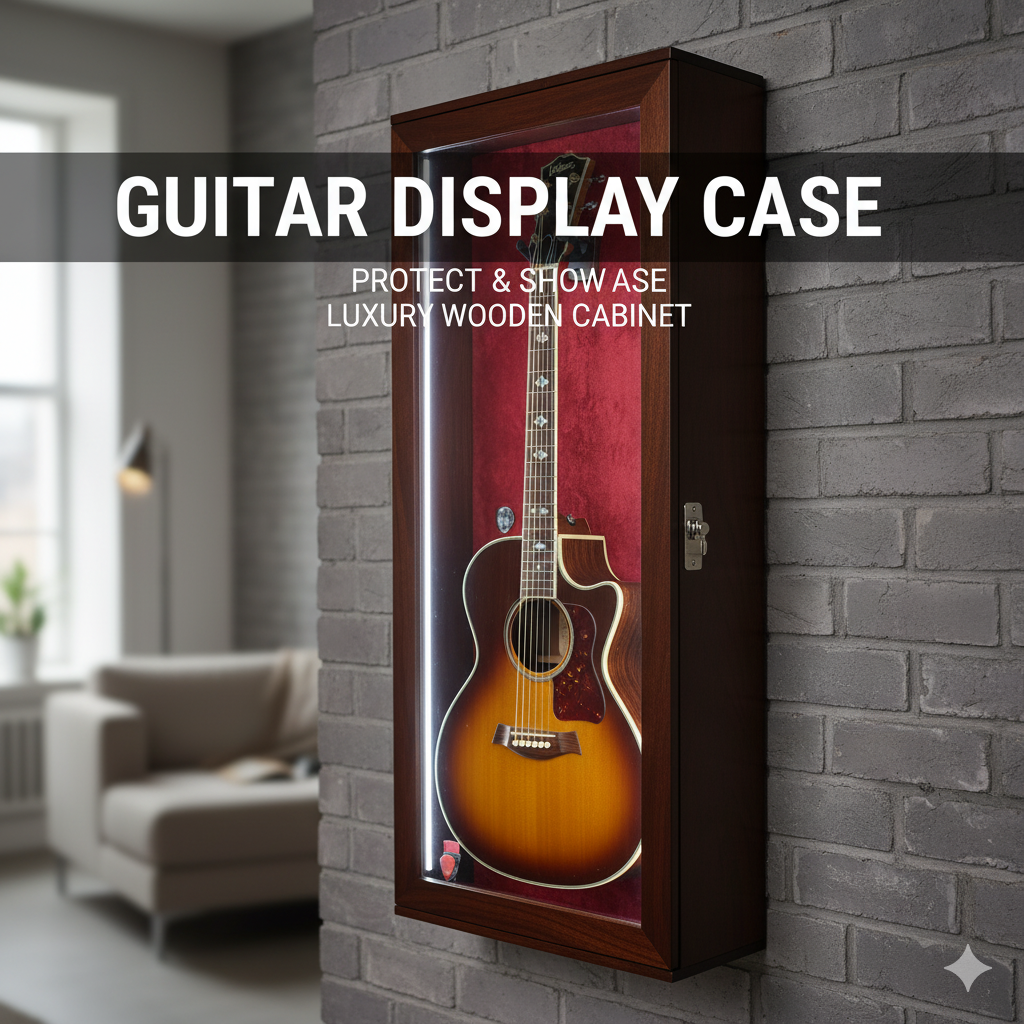
History and Evolution of the Guitar Display Case
Understanding the roots helps appreciate why a guitar display case today is so much more than a box with glass. Historically, musical instruments have been displayed in prestigious settings—palaces, museums, private collections—often behind glass or in unlocked cabinets. According to general museum practice, a display case (or showcase) is a cabinet with transparent surfaces used for viewing objects while protecting them from dust, damage or theft. Wikipedia
In the guitar world, as instruments became collectible and appreciated not only for their playability but for their design, heritage and symbolic value, the need to present a guitar for viewing while protecting it grew. Earlier, guitars might be hung on walls, placed on stands, or kept in simple cases. As the collector market expanded, dedicated display cases emerged: in the 20th-century instrument showroom, a guitar might be placed inside a glass cabinet for protection. More recently, companies such as Fender have introduced purpose-built “guitar display cases” as retail accessories. Fender
Thus the guitar display case has evolved from simple instrument storage to a combined product of craftsmanship (wood/metal/glass), design aesthetics (visibility, lighting, mounting), and functional protection (locking mechanisms, humidity control).
This evolution mirrors wider developments in display cabinet design for artefacts and valuable items. The principles of museum-grade display—controlled humidity, secure mounting, minimal contact surfaces—have increasingly influenced how premium guitars are displayed.
Objectives of Using a Guitar Display Case
Preservation and Protection
At its core, the guitar display case serves to protect the instrument. Guitars are vulnerable to environmental factors: humidity fluctuations, direct sunlight, dust accumulation, accidental contact, and simply being knocked over. A well-designed guitar display case offers a durable enclosure, tempered or acrylic viewing panes, and often mounts that secure the instrument safely. Collectors often choose such enclosures to preserve rare or vintage guitars. A Reddit user’s comment captures this:
“I keep my Thompson in an Acoustic Remedy ClimaCase … Protects against humidity variation and sunlight, while letting me gaze at my pride and joy.” Reddit
Presentation and Aesthetics
Beyond mere protection, the guitar display case elevates the instrument into a visual piece. It becomes art. The instrument is displayed as part of interior design, showroom presentation or museum-style exhibit. Visibility is key: clear panes, lighting, elegant finishes all contribute. That aesthetic dimension helps the owner to showcase their guitar as a focal point rather than tucked away.
Security and Value Retention
For higher-value or collectible guitars, a display case can incorporate locking doors or tamper-resistant hardware. This enhances the instrument’s security and helps maintain resale value. When shops sell guitars with display cases, such features are often emphasized. The product listing for a display case from Fender includes locking door specs. Fender
Enhanced Experience and Accessibility
A guitar displayed in a case still remains accessible for viewing and admiration, with minimal handling required to view it. This encourages the owner to appreciate their instrument as a piece of craftsmanship, not just a tool. In educational settings (guitar schools, museums of music), a guitar display case enables public viewing without risk of direct handling.
Contextual Integration with Design Trends
In recent design and interior décor trends, guitars themselves have become decorative elements. As noted in a lifestyle article, guitars hanging on walls contribute to home character and reflect personal identity at the intersection of music and style. Homes and Gardens A guitar display case extends this trend by providing a dedicated home for the instrument as an object of display.
Having laid out the objectives, let’s now explore how implementation takes place.
Implementation: How to Choose and Use a Guitar Display Case
Selecting and implementing a guitar display case involves multiple factors. We’ll review key criteria, best practice steps, and how to integrate the solution into your space.
Criteria for Selection
Size and Fit: The interior dimensions of the display case must accommodate the guitar’s length, width (lower bout), and depth (including body and headstock). For instance, one product lists exterior dimensions 46.63″ L × 17.5″ W × 4.5″ D and interior 43.75″ L × 16″ W × 3.625″ D. Fender
Materials and Build Quality: High-grade wood, tempered glass or acrylic panes, secure hinges, and quality hardware (locks, mounts) matter. The lining or mount should protect the instrument finish. Some cases might include plush interiors or ultra-thin mounts.
Visibility and Lighting: Clear viewing panes are key. Some display cases provide lighting (LEDs) or optional backlighting to enhance the guitar’s presence.
Mounting and Accessibility: Decide whether the display case will be wall-mounted, floor-standing, or integrated into a larger cabinet. The mounting template and hardware may or may not be included (see product details). Fender
Protection Features: Humidity control and UV protection are important for premium instruments. While not always standard, if the display case is expected to be in a non-controlled environment, these features are important. Some hobbyists build or retrofit humidity controlled cabinets.
Security Features: Locking doors or panels, tamper-proof hinges, and discreet access for authorised users may be necessary in public or commercial settings.
Setup and Use Best Practices
Placement: Choose a location away from direct sunlight, heat sources (radiators, HVAC vents), and high traffic areas. Even with a display case, the guitar should not face extreme conditions.
Mounting: Wall-mount cases should use appropriate anchors to handle the case weight plus guitar weight safely. A mounting template (when provided) simplifies this.
Viewing Angle and Lighting: Position the case such that the guitar is at eye level or slightly below; avoid glare on glass panes. Consider lighting that highlights the instrument without overheating it.
Humidity and Climate Control: If the room experiences seasonal humidity changes (as many areas in South Asia, for example), you may consider adding a small humidity pack or desiccant inside the case. For collector-level guitars, a built-in mini-climate chamber may be appropriate.
Cleaning and Maintenance: Clean glass/acrylic using appropriate non-abrasive cleaners. Dust the interior periodically. Check the hardware (hinges, lock) yearly.
Access and Use: While display is key, the guitar must remain playable. The mounting system should allow removal without damaging the finish. Training staff (in a commercial context) or family-members (in home context) in safe removal is important.
Integration into Home and Commercial Environments
At home, a guitar display case may serve both as instrument storage and decorative focal point. It may integrate with a home-studio décor, a wall of instruments, or a musical feature wall. In commercial settings (music stores, galleries, schools), display cases help showcase premium instruments or limited editions, making them visible yet secure.
In all contexts, the guitar display case becomes a statement of care and regard: the owner or institution is signalling that the instrument is valued.
State-wise and Regional Impact: Analogy and Relevance
Though a product like a guitar display case is commercial and not a government-scheme, we can draw analogies with broader themes: regional adoption, policy framework, cultural infrastructure, state-level benefits and social value. In this way, the discussion echoes how other initiatives (e.g., rural development, women-empowerment schemes) are analysed regionally.
Regional Adoption and Cultural Infrastructure
In different states or regions (whether U.S. states, Indian states, or other national subdivisions), the interest in musical instrument preservation and display varies. Regions with strong cultural heritage (music hubs, historic instrument makers) might emphasise display cases more. For instance, a music museum in one state might invest in premium display cases to preserve rare guitars, whereas in another region the focus may be on community access rather than display luxury.
Analogous to Policy Frameworks
Just as policy frameworks may provide grants or matching funds for cultural infrastructure (e.g., music schools, instrument libraries), a regional government could incentivise local manufacturing of instrument display cases (wood-craft, glasswork) for economic development. The guitar display case industry may thus benefit from subsidies, training programmes, or MSME (micro-small-medium-enterprise) development schemes in states with strong woodworking traditions.
State-wise Benefits: Local Manufacturing and Skills
States with strong woodworking or glass-manufacturing traditions could benefit from producing guitar display cases domestically. This enhances employment in manufacturing, fosters niche exports, and preserves artisanal skills. In rural or semi-urban regions of states, training programmes in woodworking could tie into building such display cases—thus contributing to rural development and skills‐transfer.
Women Empowerment and Small Business Initiatives
Small scale enterprises making premium guitar display cases could be launched under women empowerment schemes. For example, a state may offer training to women artisans in cabinet‐making and surface finishing, enabling them to produce bespoke display cases for musical instruments and thereby integrate women into the value-chain of the instrument-heritage market.
Social Welfare and Cultural Access
When institutions like schools or community music centres display instruments in proper cases, they signal respect for music heritage and create aspirational environments for youth in rural areas. A guitar display case in a school environment may elevate the status of music education, support cultural inclusion, and link with social welfare policies aiming to enhance access to arts for under-privileged communities.
By framing the guitar display case discussion in this way, we appreciate how a seemingly niche product interacts with broader themes of regional economics, culture, empowerment and infrastructure.
Success Stories: Real-World Examples
Premium Instrument Showroom
In one high-end guitar store, a prominent brand offered a dedicated vertical-mount guitar display case with a locking door and plush interior (see product details referred earlier). Fender The visual presentation attracted serious buyers, and the instrument inside became part of the store’s identity. The store reported improved walk-in traffic and higher perceived value for displayed instruments.
Collector Home Studio
A private collector posted on a guitar forum discussing how he built a humidity‐controlled cabinet to display his vintage guitar. He wrote:
“Humidified guitar display case” and “My Display Cabinet, with passive humidity control” appeared in posts on r/guitar and r/guitarporn. Reddit
This illustrates how the guitar display case can be customised for niche requirements, including humidity control and bespoke mounts.
Music School Display Wall
A regional music academy refurbished its facility, installing wall-mounted display cases for donated vintage guitars. This display served dual purpose: instruments could still be played during classes, but when not in use they were showcased in cases, preventing damage from curious students, and preserving the instruments for future generations. The display case thus became part of the educational infrastructure, inspiring younger students and adding prestige.
Regional Manufacturing Initiative
In a state with strong cabinet-making skills, a small business cluster was launched to produce custom display cabinets (for musical instruments, memorabilia, etc). Women artisans trained under a state-supported programme converted their skills into manufacturing specialised guitar display cases and shipping them globally. This mirrors how manufacturing of display cases can tie to regional economic development and empowerment.
Comparisons with Other Schemes and Solutions
Comparison with Standard Instrument Cases
A standard gig-bag or hard shell case is designed for transport and storage, not for display. According to the gig bag article: such bags are softer, more portable but offer less protection when compared to more rigid cases. Wikipedia A guitar display case differs: it emphasises visibility, aesthetic presentation, and environment control over portability.
Advantages of a guitar display case over standard instrument cases:
-
Transparent viewing pane for display
-
Mounting and presentation fit for walls/rooms
-
Potential for climate/humidity control and lighting
-
Security features for display purposes
Comparison with Wall Mounting Without Case
Some enthusiasts simply mount guitars on wall hooks or stands, foregoing a case entirely. While this offers easy access and visual effect, the instrument remains exposed to dust, moisture, accidental knocks and UV light. As one lifestyle article noted, guitars displayed on walls can contribute to décor. Homes and Gardens However, a guitar display case adds protection while still offering visibility, making it a superior option for valued instruments.
Comparison with Built-In Museum Display Systems
In museum or high-end gallery settings, instruments might be displayed in custom built-in vitrines with advanced environmental controls. A guitar display case is a scaled-down version of that concept, accessible to private collectors or small businesses. While museum systems might cost far more and require specialised HVAC, a high-quality commercial guitar display case brings many of those benefits to a more accessible level.
Comparison with Digital/Virtual Display
Some modern collectable instruments are displayed virtually (online galleries, 3D tours) or stored offsite in climate-controlled warehouses. While that offers visibility for remote viewers, it lacks the tangible experience of viewing in person. A guitar display case enables the physical presence of the instrument in a space. Thus it complements digital display rather than competing with it.
Challenges and Considerations
Cost and Space Constraints
High-quality guitar display cases—especially those with built-in climate control and locking mechanisms—can be expensive and require wall space or floor footprint. In smaller homes or studios, allocating a dedicated wall may be challenging. Cost may deter hobbyists who prioritise playing over display.
Environmental Control Limits
While many display cases offer good protection, they may not match full museum-grade climate control. In humid or hot climates (such as many parts of South Asia), secondary measures (humidifiers, desiccants, HVAC) might still be required. Over-reliance on the case alone without proper room conditions may give a false sense of security.
Accessibility vs Security Trade-off
A guitar display case that is locked or mounted may reduce ease of access for playing. Owners must balance the trade-off between display/secure storage and being able to pick up the instrument quickly. In communal settings (music schools), access protocols need to be managed.
Aesthetic Fit and Over-Display
While the guitar display case elevates the instrument, it may inadvertently degrade the “ready to play” culture if the instrument is seen as a showpiece rather than a usable tool. Some musicians might feel restricted from playing an instrument that is behind glass or locked away.
Maintenance and Cleaning
Display cases require cleaning (glass, interior), checking of hardware and sometimes climate control media (humid packs). Neglecting maintenance may lead to dust inside, hardware failure or cushioning/lining degradation, which ironically can damage the instrument.
Customisation Limitations
Standard display cases may not fit unusual guitar shapes (e.g., Harp guitars, extended-range 8-strings, vintage offset bodies) perfectly. For such cases, custom display case fabrication may be needed, costing more and requiring lead time.
Future Prospects and Trends
Smart Display Cases with Climate Monitoring
We are likely to see guitar display cases integrated with smart features: humidity/temperature sensors linked to mobile apps, built-in lighting with adjustable colour temperature, remote access locks, and perhaps even integrated camera feeds for remote monitoring. This will allow owners, stores or galleries to monitor conditions in real-time and receive alerts when environment drifts outside safe ranges.
Customisable Modular Systems
As modular furniture and customisation trends grow, guitar display cases will move from one-size-fits-all to modular wall systems where guitars can be added, moved, rotated for display, and integrated with lighting or shelving for accessories. Modules may allow stacking, rearranging and better adaptation to the instrument collection’s growth.
Sustainability and Local Manufacture
Given increasing emphasis on sustainability, acoustic-quality woods, recycled glass/acrylic and locally manufactured components will become more important. Regional manufacturing (tying into local artisan programmes) will gain traction. This aligns with rural-development and skill-transfer initiatives: states or regions with wood-craft traditions may support small business clusters to produce guitar display cases for domestic and export markets.
Democratisation and Affordable Options
While premium models exist today, lower-cost versions with sufficient protection and display aesthetic will proliferate, making guitar display cases accessible to a broader segment of guitarists—not only collectors. This will expand the market and encourage hobbyists to incorporate protective display into their studios.
Integration with Digital Display and Experience
As the metaverse, digital galleries and virtual instrument museums grow, physical guitar display cases will interface with digital layers: QR codes or NFC tags on display cases that link to instrument history, video demos, or interactive content. Museums and music schools could use guitar display cases not only to protect assets but to provide educational layers and interactive experiences.
Expanded Use Cases Beyond Guitars
While the focus here is guitar display cases, the concept will extend to other instruments (keyboards, rare stringed instruments, ethnic instruments) and memorabilia (signed guitars, stage-used instruments). The display case design will adapt to those broader categories, increasing the overall market and relevance.
Why a Guitar Display Case Matters Now
In an era where musical instruments are not only tools but also cultural artefacts and investment assets, the guitar display case plays a meaningful role. For musicians, it affirms the value of their instrument. For collectors, it ensures preservation and visibility. For interior designers, it offers a dynamic focal point. For regionally-based craftsmen and women, it provides opportunity in manufacturing and design. For music education, it signals that guitars are worth caring for and observing.
By selecting and integrating the right guitar display case, stakeholders (whether individuals, businesses or institutions) can achieve multiple objectives: protect their instrument, elevate its presentation, and connect with broader themes of cultural preservation, empowering craftsmanship and regional economic development.
Practical Buyer’s Guide: What to Ask and Compare
When you decide to invest in a guitar display case, here is a practical checklist to guide your decision:
-
Interior Dimensions – Will it accommodate your guitar’s body length, width and depth comfortably?
-
Mounting Style – Wall-mounted, floor-standing or hybrid? Does the product include a mounting template or hardware?
-
Viewing Pane Material – Tempered glass vs acrylic: safety, clarity, UV filtering.
-
Interior Lining and Mount – Is the lining plush or inert (non-reactive to finishes)? Are the mounts adjustable?
-
Protection Features – Does the case include humidity/temperature control or encourage it? Is there a lock or secure door?
-
Lighting – Built-in LED or provision for lighting? Is the lighting safe for instrument finishes (heat, UV)?
-
Build Materials and Finish – Wood species or engineered wood for stability; hardware quality; door hinges; lock mechanism.
-
Aesthetic Fit – Does it match the décor (wood finish, hardware style, front glass)?
-
Service and Maintenance – Are spare parts available? Is the manufacturer or vendor reliable?
-
Cost vs Value – Balance between function and budget. Remember: the display case protects an instrument that may be far more expensive than the case itself.
-
Future Expansion – If you acquire more instruments, is the unit expandable or modular, or will you need multiple cases?
-
Environmental Conditions – Consider how the case will perform in your region’s climate (for example, high humidity regions may require extra control).
Summary and Key Takeaways
-
A guitar display case is more than just an instrument cabinet: it is a protective, aesthetic, security-and-display solution for cherished guitars.
-
It evolved from traditional display cases and instrument storage cases to specialised units that emphasise visibility, protection and presentation.
-
The key objectives are preservation, aesthetic presentation, security and enhancing the user experience of owning a guitar.
-
Implementation requires careful selection of size, materials, mounting style, visibility features and environment controls.
-
In a regional/government-scheme analogy, the guitar display case relates to cultural infrastructure, regional economic development (local manufacture), women empowerment through craft enterprises, and social welfare via music education and instrument access.
-
Success stories range from high-end showrooms to private collector home studios, music schools and artisan manufacturing clusters.
-
Comparisons show how display cases differ from standard instrument cases, wall hooks and museum-grade vitrines, each with their pros and cons.
-
Challenges include cost, space, environmental control limitations, and maintenance demands.
-
Future trends point to smart features (IoT, sensors), modular systems, sustainable manufacture, affordable models, digital integration and expanded use cases across instruments.
-
For anyone serious about preserving and presenting their guitar, investing in the right guitar display case makes strategic sense.
FAQs
What is a guitar display case and why do I need one?
A guitar display case is a specialised enclosure with transparent panes, designed to showcase and protect a guitar from environmental hazards, accidental damage and theft while allowing it to be visually appreciated. If you own a valuable, vintage or decorative guitar (or one you simply want to elevate as part of your space), a display case helps meet that objective.
How does a guitar display case differ from a regular guitar case?
Regular guitar cases (gig bags or hard shell cases) are designed for transport and storage. They focus on portability, shock absorption, and basic protection. A guitar display case prioritises display: visibility (glass or acrylic front), secure mounting, aesthetic presentation, potential humidity control and often a more permanent installation rather than frequent transport.
What size should I choose for my guitar display case?
You should measure your guitar’s length, width at the widest body point (lower bout), and depth (body plus headstock). Ensure the case’s interior length, width and depth provide clearance without the guitar touching panes or mount hardware. Also consider space for mounting or installation in your room or studio.
Do I need humidity or climate control with my guitar display case?
Yes, especially in climates with high humidity, large fluctuations in temperature or when the guitar is vintage or high value. While some display cases may include passive protection (sealed door, minimal venting), active humidity control (humidifier or desiccant packs) is a smart addition. Without it, the instrument may still be exposed to risk despite being in a case.
Is mounting the guitar in a display case safe for the instrument finish?
If done properly, yes. Choose mounts that support the guitar at strong structural points (neck-plate area, headstock, body) and ensure the finish (lacquer, varnish) does not rub against hardware. Also ensure the case is level, stable and vibration-free. Regular inspection helps identify any abrasion or wear.
Can I display more than one guitar in a single display case?
It depends on the case size and mounting system. Some display cases are designed for a single instrument. Others—especially modular wall systems—may allow multiple guitars. However, ensure there is adequate spacing between instruments so they are not in contact and can each be viewed clearly.
What are the maintenance requirements for a guitar display case?
Maintenance involves cleaning the viewing pane (glass or acrylic) with non-abrasive cleaner, dusting the interior, examining hardware (locks, hinges, mounts), checking for moisture or condensation inside, replacing or inspecting lining or cushioning, and monitoring humidity/temperature if control features are present. Regular inspection ensures the guitar remains safe and presentable.
I trust this gives you an authoritative, in-depth resource on guitar display cases from every relevant perspective. If you’d like me to tailor a section for a specific region (e.g., South Asia, Pakistan), showcase manufacturers, or provide a list of recommended display case models, I can certainly help.


